Sad Funiculars
How do you write about your pretty, shitty hometown?

Dubuque, Dubuque. The very name conjures up the meat and the river. I grew up with the mighty Mississippi River just visible from my bedroom window on the second floor of 205 Cardiff St. We lived at the top of one of the city’s many bluffs, usually the site of down-at-the-heel Victorian mansions, but in this case home to more modest dwellings, like the one my parents bought for $25,000 in 1981. It had a claw foot tub in lieu of a shower, so we used a hand-held rubber spray hose to wash our hair—Nabokov implies in Lolita that the presence of one of these things in a home portends great sadness. I don’t know about that, but I know that my much-wealthier high school boyfriend found our shower set-up worthy of much hilarity.
It’s hard for me to separate the Dubuque of my youthful depression from the Dubuque of less fraught experiences and perspectives. In so many ways, it’s a really cool town. The architecture tucked away in the hills where the glacier stopped takes you back one hundred years or more. You could watch the river from the WPA-era Eagle Point Park and forget that it was the 1970s. I used to watch the boats coming into Lock and Dam #11 from the vista of Eagle Point, staring through one of the coin-operated binoculars whirring away for five minutes while you tried to take in as much of the action in that time frame as you could. I always focused in on the tiny people working on the boats, wondering what their lives were like, and whether or not they were as sad as me.
Dubuque was and is home to a funicular, the Fenelon Place Elevator or “the 4th St. Elevator” as we always called it. In this picture from 1979, the fare is 10 cents each way, quite a bargain.
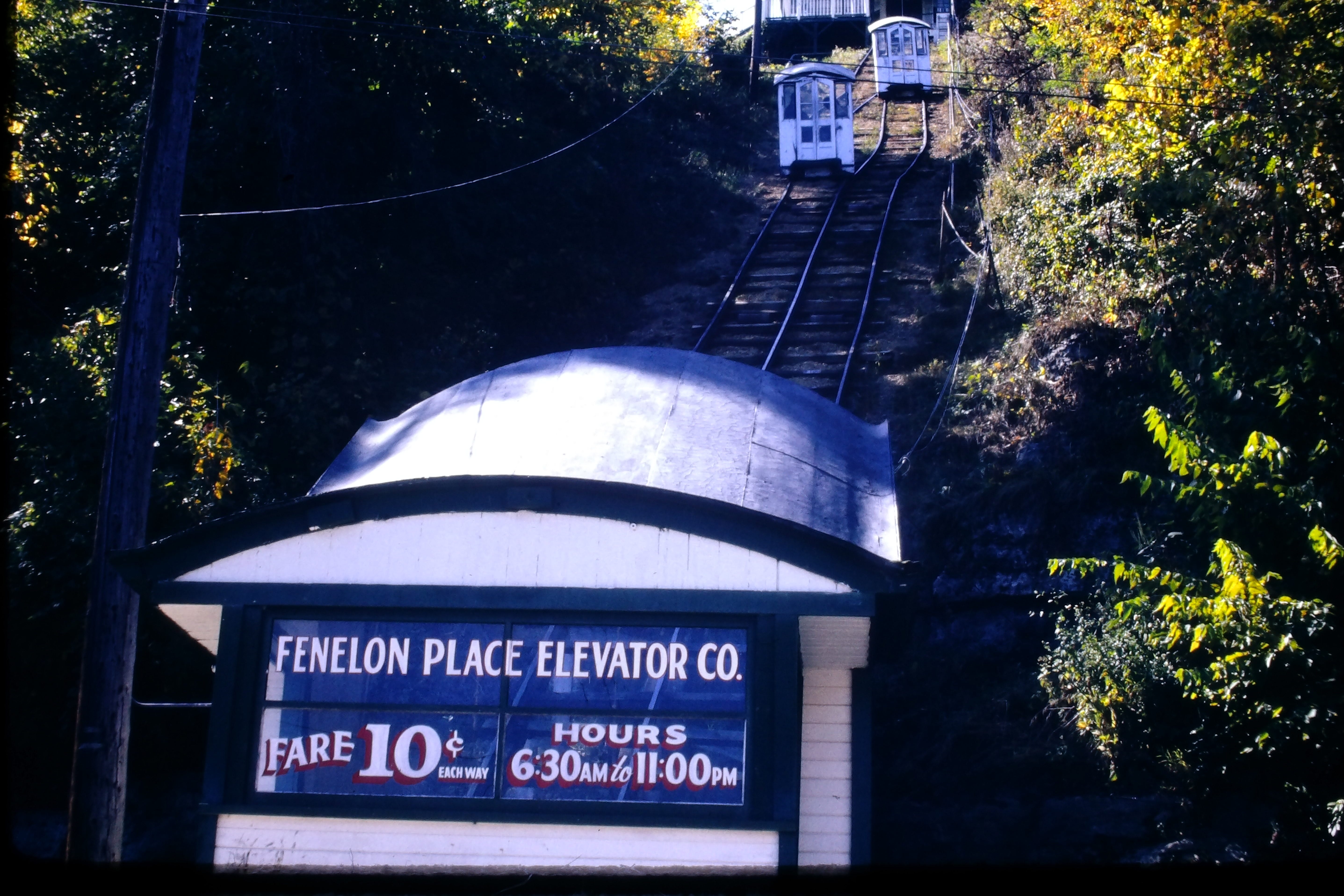
The Elevator’s top station, where you’d pay the fare and chat up the oldster behind the till, was a mere four blocks from our house on Cardiff St. If you wanted to get downtown without walking all the way down the terrifyingly steep West 3rd St., you could opt for a terrifying (to my mother) ride on a rickety funicular instead.
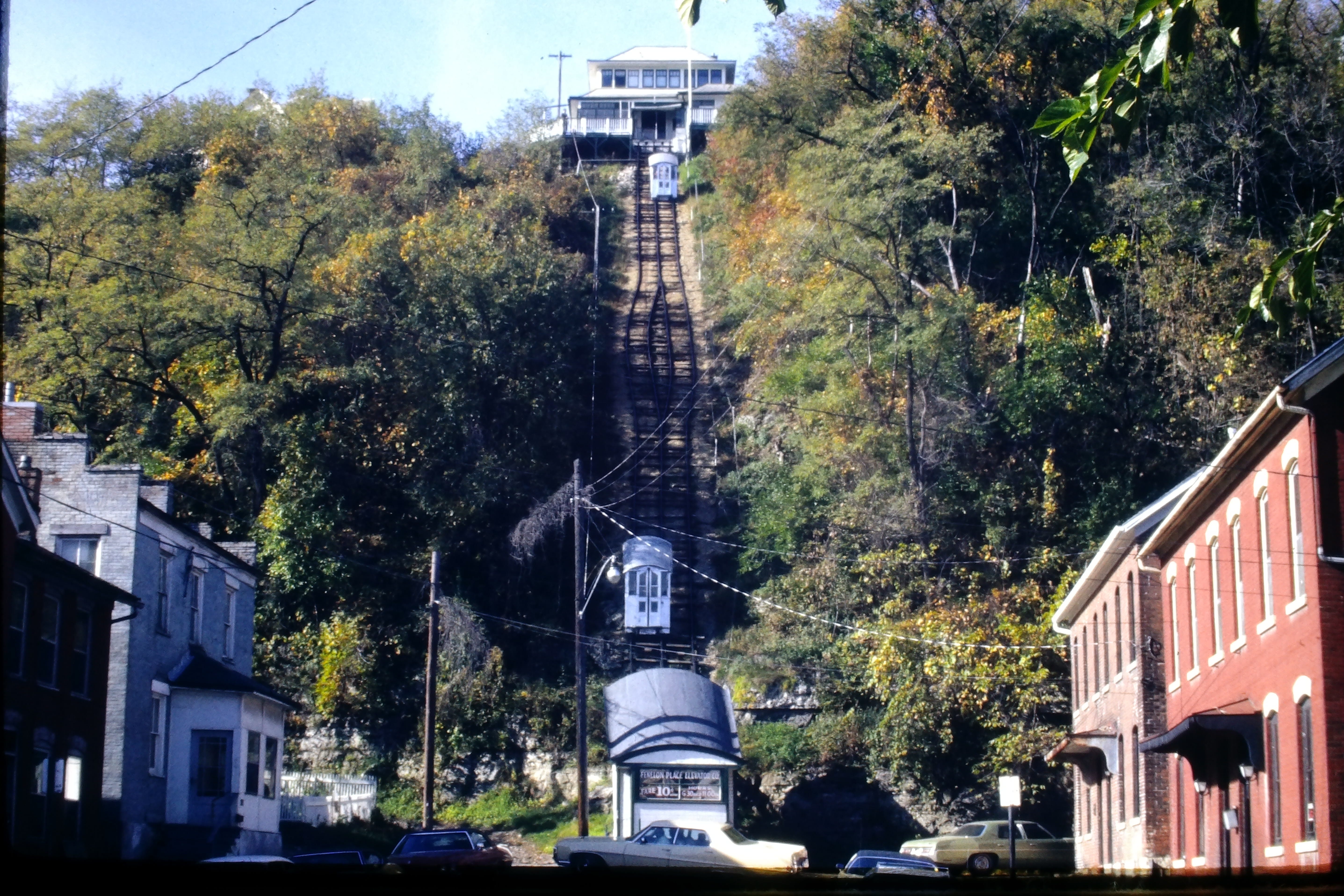
I loved the 4th St. Elevator growing up, but didn’t see it as an anomaly. It was definitely a tourist destination, and when our raucous cousins from Evansville, Indiana came to visit, we always took them for a trip. But to me, it was just part of the landscape, the breathtaking landscape, which of course wasn’t breathtaking to me because I was six years old and I didn’t understand the appeal of scenery, or old things, or quaint things. I just loved the ride. We weren’t likely to ever get to Disneyland, and the closest amusement park was Adventureland in Des Moines, which we’d never be able to afford anyway. The 4th St. Elevator was my Screamin’ Eagle, my roller coaster, and to be fair it was rather alarming to be threaded down the steep hill on clackety tracks on a steel cable that didn’t seem strong enough to hold the cable cars, but somehow it did.
I’m writing about being depressed in a beautiful place as a kid and finding it difficult. During my elementary school years, I was almost constantly bullied at school and my homelife was one long decade of the Rosary. Growing up, I was sad all the time without quite knowing the reasons for it, other than the obvious, so the place I grew up in felt sad. Even the things that I loved, like the 4th St. Elevator, made me feel sad. I didn’t like that it cost money, money that I already knew was tight in my household. I didn’t like how anxious it made my mother every time we rode the thing. I didn’t like how it felt when the ride was over, like everything good and right was over too. If you’d asked me to describe the 4th St. Elevator back in those days, I would probably have said it was “sad” and now that I have a much bigger vocabulary and better understanding of my own psychology, I’m left with the same word: sad. Patriarchy, Catholicism, bullying, the river, funiculars—it’s all tied up in my head, in my writing, and I can’t seem to get out of childish, banal language for what I was feeling back then, and what I’m feeling now.
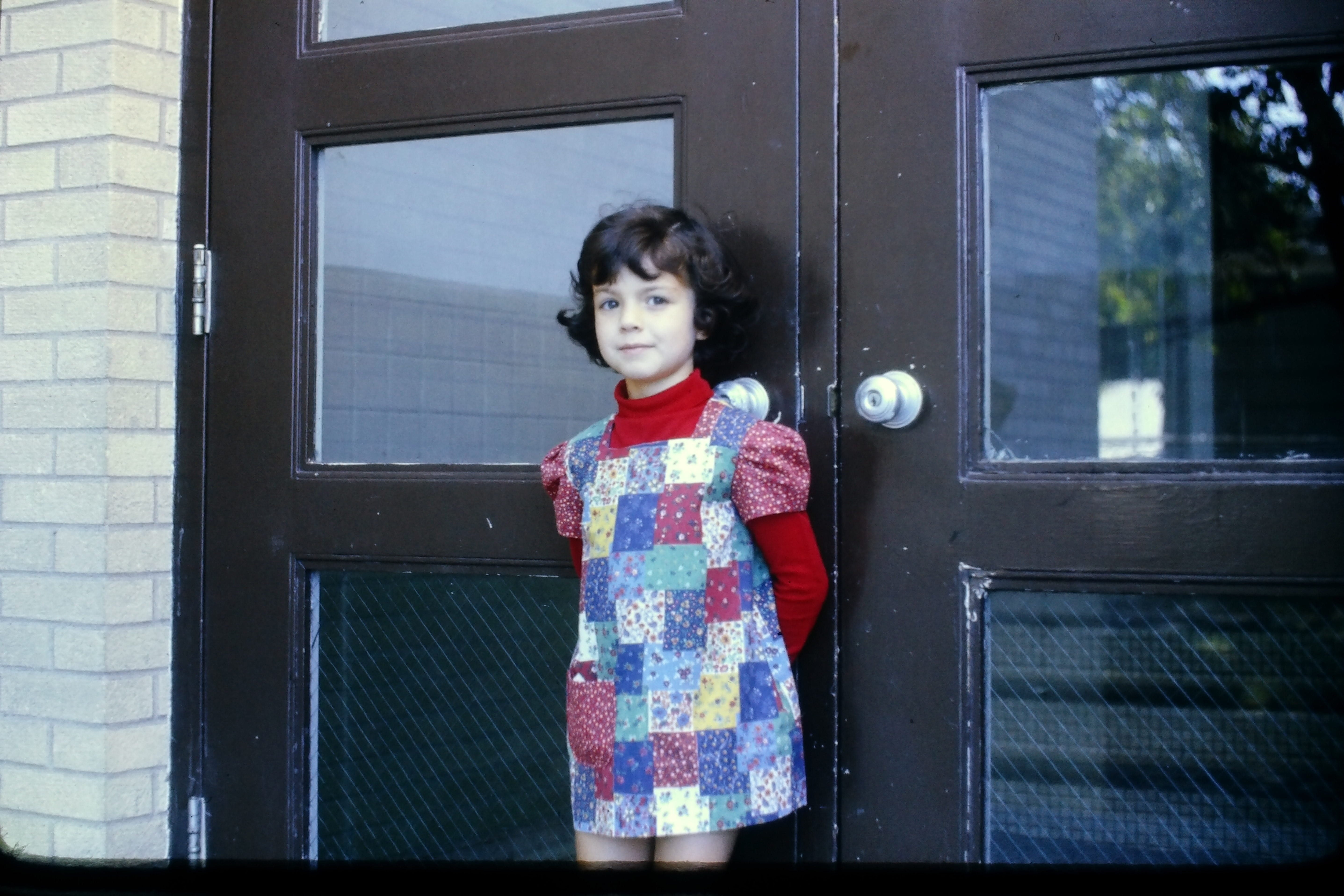
Me in front of St. Joseph’s School in 1977.
Bibliography
Nabokov, Vladimir. Lolita. 1955.
I love this, Loretta! That last sentence suggests to me that you're feeling sad now. I hope that I'm misreading, and that if not, something happy comes your way!
This is a great rendering of how remarkable things from our individual childhoods are just taken as givens. This inspires me to write about my own beautiful fucked up hometown: Oakland, California!